 Indiiramma Garden
Check for Root Problems When Growth Stalls
A plant that stops extending leaves may need a root inspection, but it does not automatically need a larger pot. Check the growing conditions and the root ball together before buying another container. Crowding, damaged roots, unsuitable media, and ordinary seasonal slowdown lead to different decisions.
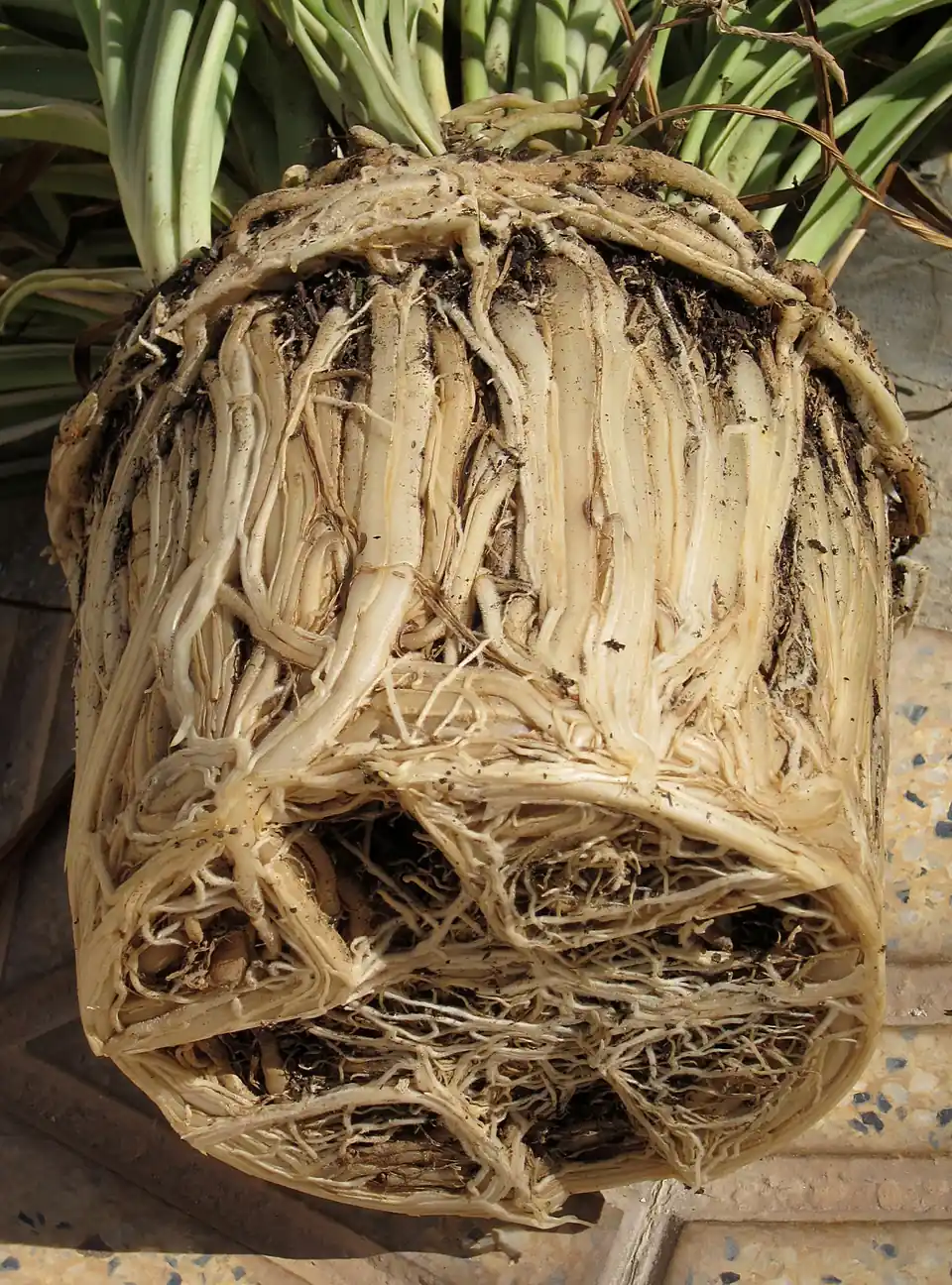
UC Integrated Pest Management includes pot-bound roots, poor drainage, compaction, and root disease among possible contributors to weak growth and other houseplant symptoms. Its diagnostic guide makes clear that multiple factors can overlap. UC houseplant guide
Establish what “stalled” means
Identify the plant, then compare it with its own recent growth rather than a different species nearby. Record when you last saw a new leaf and whether the plant has moved, flowered, been harvested heavily, or entered a lower-light season.
Review media moisture and the watering pattern. Has the pot started drying unusually fast, or does it remain wet longer than before? Check light and temperature changes as well. A lack of growth is not proof that the current container is too small.
Look through drainage openings and at the surface without pulling roots or digging into the crown. These initial observations may help decide whether removing the root ball is necessary.
Inspect only when you can support the plant
Prepare a clean work area and have a plan for returning the plant to a suitable pot. If it is too large or difficult to handle, obtain help rather than lifting it by the stem or improvising an unsafe maneuver.
For a manageable plant, release the container carefully while supporting the root ball. Examine how much of the space is occupied, whether roots circle densely, and whether the growing material remains accessible between them. Also note texture and any damaged or decaying areas.
Avoid deciding from color alone. Roots vary among plants and can be stained by media; an unexplained soft or deteriorating root system deserves identification, not an automatic “root-bound” label.
Choose the response that matches the finding
If the plant is genuinely crowded and otherwise healthy, consult repotting guidance for that plant group. Select an appropriate increase in usable space. If the root system is compromised, a much larger volume of fresh wet media may not address why it declined.
If root occupancy is modest, turn back to the growing conditions rather than enlarging the pot by habit. Record what you found so that the next decision starts with evidence. Avoid applying fertilizer or root-pruning techniques as universal growth stimulants.
Following any change, monitor moisture and new growth without repeatedly uprooting the plant to check progress. The observations here organize a decision; they cannot identify a pathogen or guarantee recovery. The primary source is a houseplant guide, so edible outdoor crops and woody plants may need more specific advice. No compulsory repotting interval, root-color rule, or promise that a bigger container will restart growth is implied.