 Indiiramma Garden
A Wilting Plant May Be Too Wet
Pause before watering a wilted plant. The first useful question is whether its roots are short of available water or are struggling in an already wet environment. The leaves alone do not distinguish those situations.
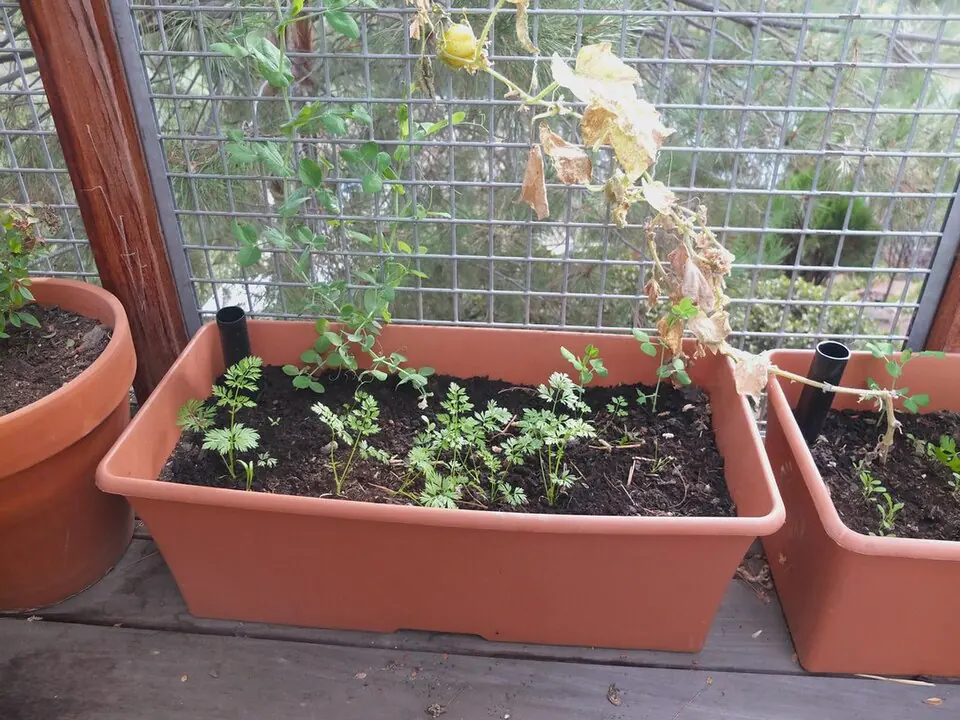
University of Maryland Extension explains that excessive moisture can reduce root-zone oxygen, damage fine roots, and leave a plant unable to take up water. Its visible symptoms can resemble drought stress. Maryland overwatering guide
Check the media, then the container
Inspect below the surface in a way appropriate to the plant and pot. For a small manageable container, its weight can provide a useful comparison if you know how it normally feels before and after watering. Do not lift an awkward heavy planter merely to perform this check.
Look for an outer cover or saucer holding water. Review whether the actual drainage openings are clear and whether a reservoir system has been assembled as intended. A wet tray beneath an ordinary pot and a designed self-watering planter are different arrangements.
Record the last watering and recent weather or indoor changes. A wilt noticed during a hot afternoon deserves investigation; it is not permission to keep flooding the pot until the foliage stands upright.
Follow the evidence into two different paths
If the root media is dry, address watering using advice for the plant and container. Observe whether water moistens the mix or immediately escapes around a dried root ball. Maryland notes that media pulled away from a pot's sides may need careful rehydration. Do not assume one quick splash has reached the roots.
If the media is wet, avoid adding more simply because the leaves droop. Remove unintended standing outflow, investigate the cause, and consider root inspection if it can be done safely. Keep the plant supported while removing a root ball; do not pull on its stem.
If neither observation explains the wilt, check temperature exposure, damaged stems, and signs of pests or disease. Wetness is one piece of evidence, not proof of a particular root pathogen.
Know when a rescue needs identification
Document root texture, odor, media condition, and the pattern of decline for a local extension service or diagnostic clinic. Root color by itself is not a universal health test across species. A badly affected plant may require a decision about disposal rather than repeated experimental treatments.
Do not apply a fertilizer or fungicide as a default response to wilt. Select any intervention only after establishing why it is appropriate for the identified plant and problem.
After a correction, check the root media again before the next watering. Keep a dated note of whether wilt returns or other symptoms progress. This guide does not promise that a wilted plant will recover, and its primary source concerns indoor plants. It establishes why wet and dry roots require different decisions, not a diagnosis from a photograph or a fixed waiting period.