 Indiiramma Garden
Drainage Holes Matter More Than a Gravel Layer
Trace the drainage path and understand why basal gravel does not solve wet growing media.
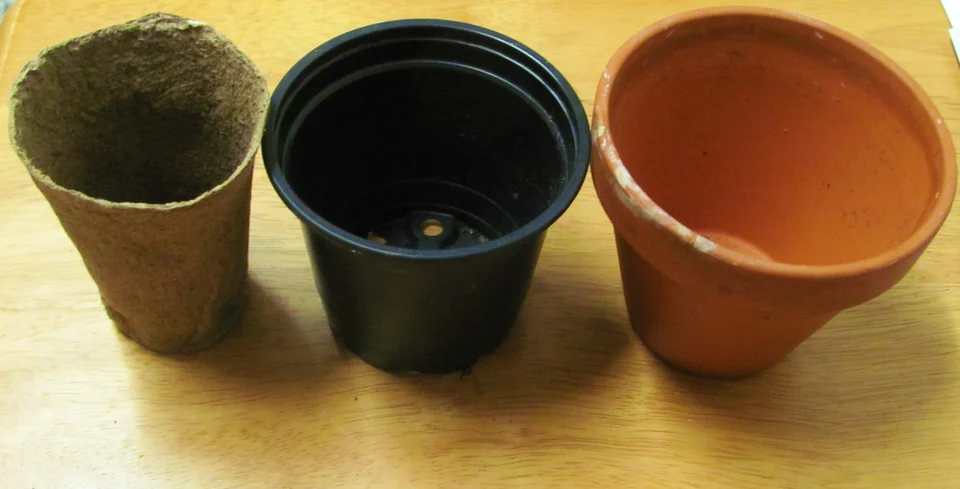
When a pot stays wet, putting stones beneath the potting mix can seem like an obvious improvement. The spaces between the stones look like places for excess water to go. In an ordinary container, however, a gravel layer does not solve the drainage problem above it.
NC State Extension explains that water collects in the finer growing media above the coarse layer. Adding gravel therefore does little to prevent saturation and takes away space that could hold useful growing media. NC State container handbook
Start by examining how water leaves the actual container.
Trace the outlet before filling the pot
Turn an empty pot over. Are the apparent holes open, or are they molded knockouts that still need attention? Check the instructions before changing the container. A decorative vessel may be intended as an outer cover, while a reservoir planter may have an entirely different arrangement.
Next, consider the surface beneath it. An outlet that disappears against a flat support deserves closer inspection. Make sure the setup allows you to see and manage drained water without damaging the surface below or dripping onto a neighbor's space.
If there is a saucer, make it reachable. A tray hidden beneath a heavy planter is difficult to inspect or empty. Plan that access while the pot is empty, rather than after it has been filled and planted.
Separate three different layers
A layer of stones underneath the growing media is the gravel approach discussed here. Mulch on the surface has another purpose. Neither should be confused with the perforated platform and reservoir supplied as part of a self-watering planter.
When using a nursery pot inside a decorative cover, examine both pieces. The inner pot may drain properly while its cover retains all the outflow. Removing the inner pot for watering can be a practical arrangement if it is manageable, but decide where it will drain and how you will return it without spills.
Avoid improvising a reservoir simply by leaving a conventional pot in standing water. A purpose-built system needs to be understood on its own terms; the absence of bottom holes does not by itself identify one.
If the plant is already staying wet
Adding gravel is not the next diagnostic step. Write down the container type, the growing media used, where the water exits, and how watering decisions are made. Check whether water is trapped in an outer vessel. If the plant is deteriorating, seek advice that considers its species and symptoms rather than repeatedly changing the container layers.
A drainage hole cannot compensate for every other problem. Keep the outlet accessible, use media appropriate for the plant, and evaluate moisture before adding more water. Treat those as separate decisions instead of expecting a hidden stone layer to manage them all.
Evidence and limits
The NC State handbook addresses ordinary containers. N.C. Cooperative Extension's houseplant repotting guidance also rejects basal stones as a drainage improvement. Some older gardening material recommends them; that recommendation is not followed here. No drainage rate, saturated-layer depth, or home experiment is claimed. Engineered reservoir systems require their own instructions.