 Indiiramma Garden
Keep Mint in Its Own Container
Mint is a useful candidate for a separate pot because its spreading habit can complicate a shared planting. Give it a space you can inspect on all sides, rather than squeezing it among herbs you intend to keep for several seasons.
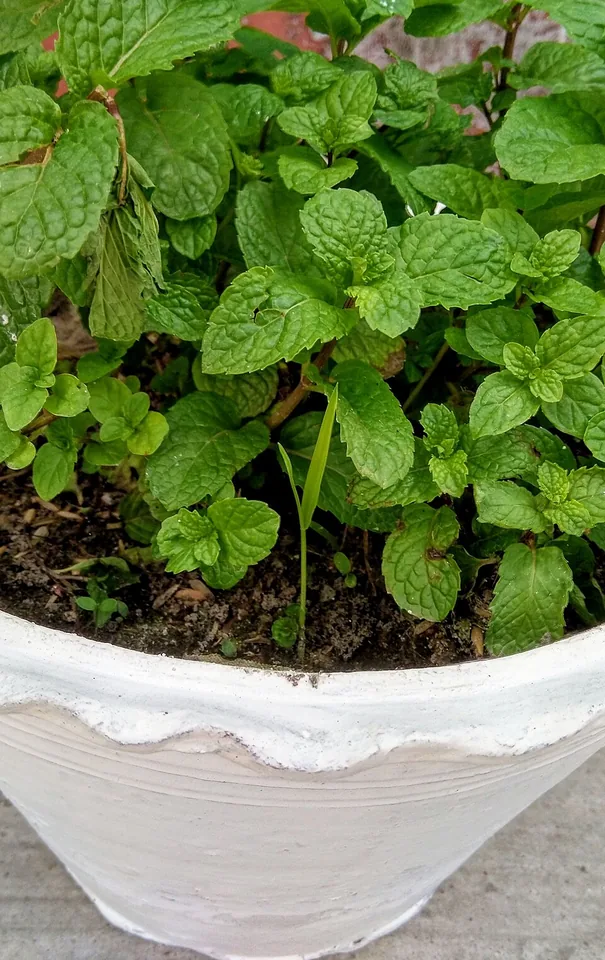
For spearmint, Mentha spicata, NC State's Plant Toolbox describes spreading rhizomes and stems capable of rooting where they contact the ground. It recommends container growing to manage that vigorous habit. NC State spearmint profile
A container is a management tool. It is not a permanent guarantee that mint cannot spread beyond it.
Know which mint you bought
Keep the original identification and cultivar name. “Mint” covers different plants and selections; a photograph, scent, or square stem is not enough to identify an unknown plant for eating. Start with a correctly labeled culinary plant from a reliable supplier.
Choose the finished position before planting. If the pot stands directly on garden soil, will you be able to lift or inspect beneath it? If stems drape over the edge, can they touch neighboring containers or a bed? Leave room to notice these contacts during routine care.
Keep harvested pieces and trimmed stems under control while working. Do not scatter them into nearby growing areas and assume that being cut makes them irrelevant to containment.
Provide moisture without trapping water
The NC State profile describes spearmint as suited to moist, well-drained conditions and tolerant of some shade. Translate that into checks on the actual pot, not a schedule copied from rosemary nearby. Inspect its media and drainage, and adjust care to exposure and plant growth.
Separate planting makes this easier: you can water mint according to its condition without making every neighboring herb receive the same treatment. A decorative outer vessel still needs inspection for retained outflow.
Keep stems from covering the entire rim if that hides the surface from view. Harvesting and trimming are opportunities to look at the whole plant, including lower foliage, rather than only picking the most convenient tip.
Reassess a crowded plant
When growth fills the container, investigate the root space instead of repeatedly adding fertilizer. If division is appropriate for the identified plant, prepare the containers and destination for retained pieces before taking it apart. The Plant Toolbox lists division as a propagation method, but it does not supply a universal division date for every climate or mint.
Retain only the plants you have room to maintain. Check the surrounding area after moving or dividing the pot, and review local disposal guidance for unwanted material where mint is problematic.
This advice is centered on spearmint. It makes no claim that all plants called mint behave identically, that a pot guarantees containment, or that culinary use proves safety for pets. Seek identification help for persistent leaf damage instead of diagnosing rust or another disease by color alone.