 Indiiramma Garden
Grow Basil in a Container Without Keeping Roots Wet
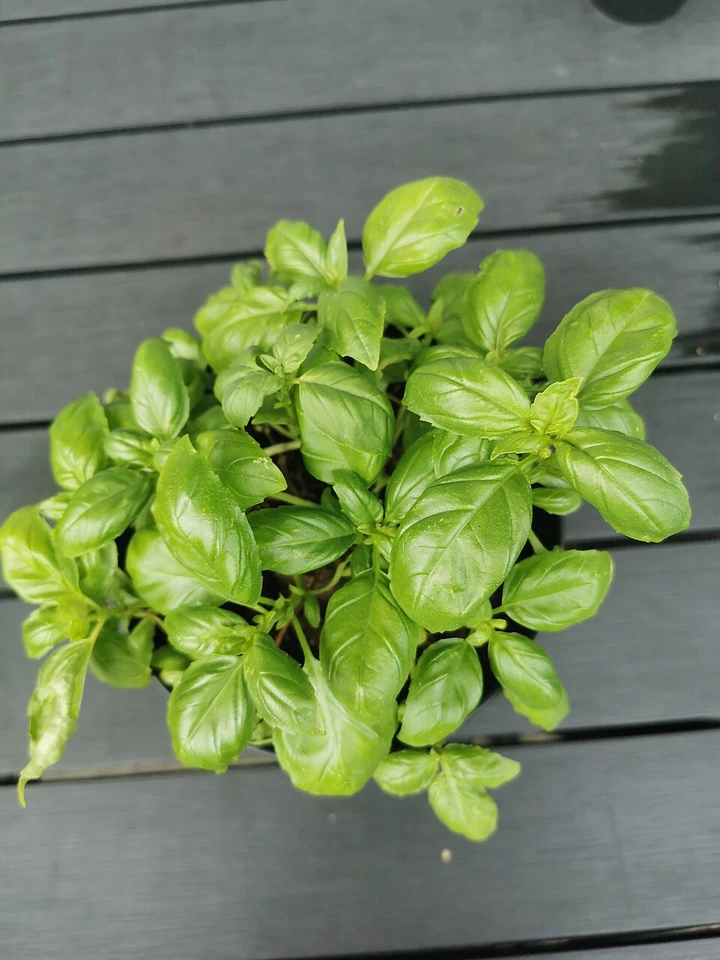
Useful basil starts with a plant you can keep actively growing and harvest regularly. For sweet basil, Ocimum basilicum, a sunny position and a draining root zone belong together. A bright location does not excuse leaving water trapped around the pot.
University of Minnesota Extension describes basil as a tender annual and recommends drainage, regular pruning, and harvesting stems above a pair of leaves. Its guidance also distinguishes faster-drying containers from garden beds. Minnesota basil guide
Set up for leaves you will use
Keep the cultivar label. A compact basil and a tall Thai type should not be assumed to fit the same finished space. Choose a container and position around that plant's expected habit, with access to the stems for cutting. Avoid planting so densely that you cannot reach the media to check moisture.
For an ordinary pot, confirm that its drainage openings are clear and that an outer cover cannot quietly fill with outflow. Use suitable container media. If you are growing indoors, assess the actual light at the leaves rather than the brightness of the room. A kitchen counter chosen for convenience may need a different arrangement to support useful growth.
Wait for locally suitable warm conditions before moving a tender plant outdoors. Introduce an indoor-grown plant gradually to its new exposure. The Minnesota source's seasonal references describe its climate, not a worldwide planting month.
Water from an observation
Feel the growing media below the surface before deciding to water. Note how the pot behaves in your location, particularly after a change in sun, wind, or plant size. When watering a conventional pot, moisten the root media and allow excess water to escape; make the receiving tray accessible for inspection.
Do not interpret a drooping leaf as an automatic request for another drink. If the mix is already wet, inspect the drainage arrangement and recent care history first. The title's warning concerns persistent wet roots, not a recommendation to let basil repeatedly collapse from drought.
Make harvesting part of maintenance
Choose a stem with a healthy pair of leaves below the point where you will cut. Take what you need while retaining enough foliage to support the plant. If your aim is leafy growth, inspect for developing flower stems during these visits instead of waiting until the whole plant has changed its habit.
Plan meals around the growth available. A small plant cannot provide a large pesto harvest every week simply because it is sold as a culinary herb. If growth is weak, review light, root conditions, and plant health before increasing feeding.
Unexplained discoloration or underside growth needs identification; it is not proof of a watering error. The Minnesota guide discusses basil downy mildew, but a photograph alone cannot establish the cause of your symptoms. No disease-free cultivar guarantee, fixed watering interval, or fertilizer dose is made here.