 Indiiramma Garden
Reuse Last Season's Potting Mix Thoughtfully
Use plant history and media condition to make a cautious decision about reuse or replacement.
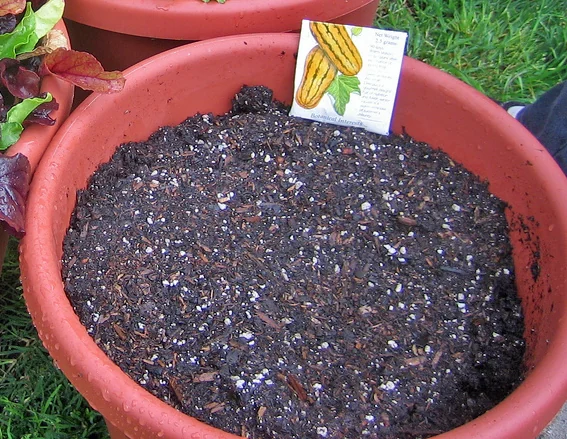
A container left after the growing season presents two different questions. Has the growing material remained suitable for another planting? And is there a plant-health reason to avoid using it again? Adding fresh material cannot answer the second question on its own.
Start with the history of the pot. Write down what grew there, how the plants performed, and whether a pest or disease was identified. “Old mix” describes an age, not a diagnosis.
Keep the history attached to the material
If you empty several containers, avoid combining them before reviewing their histories. Once healthy-looking material and suspect material are mixed together, you have lost the ability to make separate decisions. Label anything whose history is uncertain and set it aside while you investigate.
Consider what happened near the end of the crop. A plant removed after its normal season is a different case from one that died unexpectedly. A vague memory of yellow leaves cannot establish which disease, if any, was present. If an important plant-health problem was never identified, ask a local extension service about that situation before deciding where the material should go.
Do not describe media as disease-free simply because you cannot see a pest in it.
Conditional reuse has limits
In a response to a Baltimore gardener, University of Maryland Extension allowed refreshing previously successful container mix, while distinguishing plants affected by serious soilborne disease. The advice also recognized that established perennials need not automatically be uprooted to replace all their media. Maryland's used-media response
That response is useful because it connects the decision to plant history. It is not a universal recipe for an unknown bucket of material. Its suggested refresh proportion belongs to the case discussed; copying that number does not make every mix suitable for another season.
Inspect the physical condition as well. Note whether the material has settled, whether you can identify the original product, and whether the next crop has different requirements. If you cannot establish that it remains appropriate, fresh suitable media can be a simpler starting point than trying to repair an uncertain blend.
Why recommendations differ
Colorado State University Extension takes a more conservative position and advises against reusing prior-season potting material because it may contain disease organisms. Colorado container guidance
These sources do not support a single claim that reuse is always safe or always necessary. A sensible decision depends on what is known, what went wrong, and what will be planted next. Avoid turning a preference to reduce waste into a guarantee about plant health.
Keep feeding separate from that decision. If a reused or refreshed mix is suitable, establish its nutrient needs using the product information and crop guidance. There is no universal scoop of fertilizer that restores all old media.
Plan the exit route too
For material you will not reuse, check local disposal or composting guidance. Do not assume a home compost pile will eliminate a suspected pathogen, or that a municipal collection accepts potting mix. Give the service an accurate description and follow its rules.
This article offers a decision process, not a home sterilization method. It establishes no guaranteed reuse lifetime, refresh ratio, pathogen treatment, or fertilizer dose.