 Indiiramma Garden
Keep Tools and Reused Pots Clean Between Plants
Remove debris before choosing a disinfectant. Clean-looking blades and pots can still carry plant pathogens, and a product needs the right surface, use directions, and contact time to be useful.
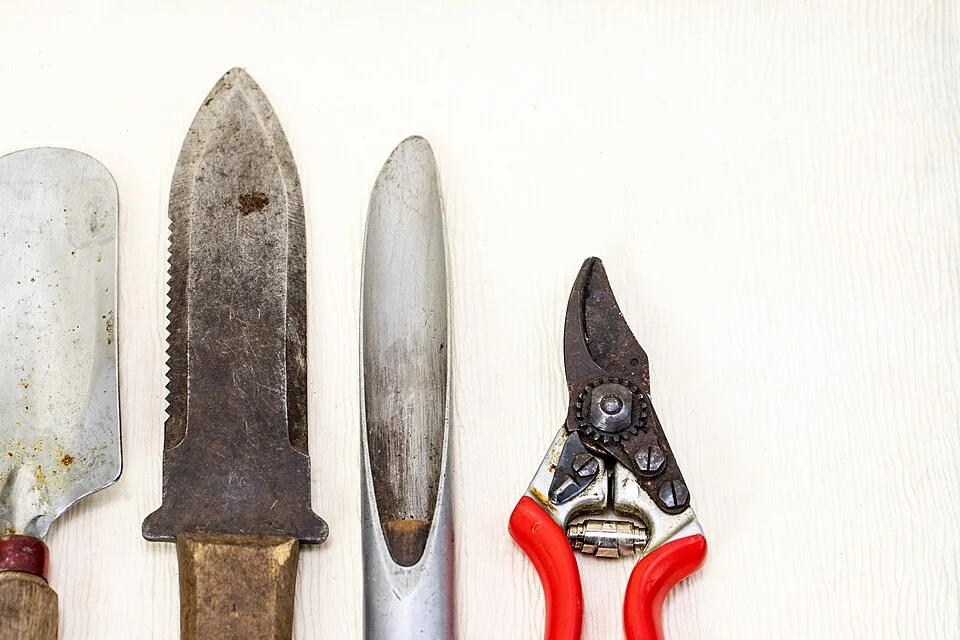
Separate dirty work from ready-to-use equipment
After cutting an unhealthy plant or emptying an affected pot, keep the equipment apart from clean tools. Bits of root, sap, and medium can move from one plant to another. A quick tap against the bench does not remove material lodged in joints or drainage holes.
Start with cleaning: scrape or brush away loose debris, then wash suitable items with water and detergent. Work into crevices and around the whole container, including its outside. Rinse as appropriate for the material and keep the cleaning area separate from food preparation.
Choose disinfection for the actual task
University of Minnesota Extension distinguishes cleaning from disinfection and emphasizes that dirt interferes with the latter. Read a suitable disinfectant's current label for the surface and intended use. The concentration, whether dilution is needed, and how long the surface must stay wet belong together.
Do not borrow a household cleaning recipe from a different product or assume that stronger is safer. Some agents corrode metal or damage painted and plastic surfaces. Follow ventilation, protective equipment, rinsing, storage, and disposal directions. Never mix cleaning or disinfecting chemicals.
Make the clean state last
Allow items to dry as directed and store them where soil and plant debris will not immediately recontaminate them. Follow the tool maker's maintenance guidance for moving parts and blades. A newly cleaned pair of pruners laid back in the dirty waste pile is no longer ready for the next healthy plant.
When moving from a diseased plant to another plant, stop and clean and disinfect appropriately before continuing. Do the same when bringing tools back from another garden. Reused pots should be sound enough to clean; cracked rough surfaces and inaccessible residues can make reuse less practical. This routine reduces avoidable transfer of plant problems. It is not a certification that a pot is sterile, nor is it a food-contact sanitation protocol.
Sources and scope
- University of Minnesota Extension, Clean and disinfect gardening tools and containers.