 Indiiramma Garden
Grow Peppers in Pots with Warmth and Consistent Care
A pepper that sits still after planting may be responding to its conditions rather than asking for more fertilizer. Start by looking at the weather and root-zone moisture, then examine the plant's stage and cultivar. A small container garden makes it possible to keep that history for each plant.
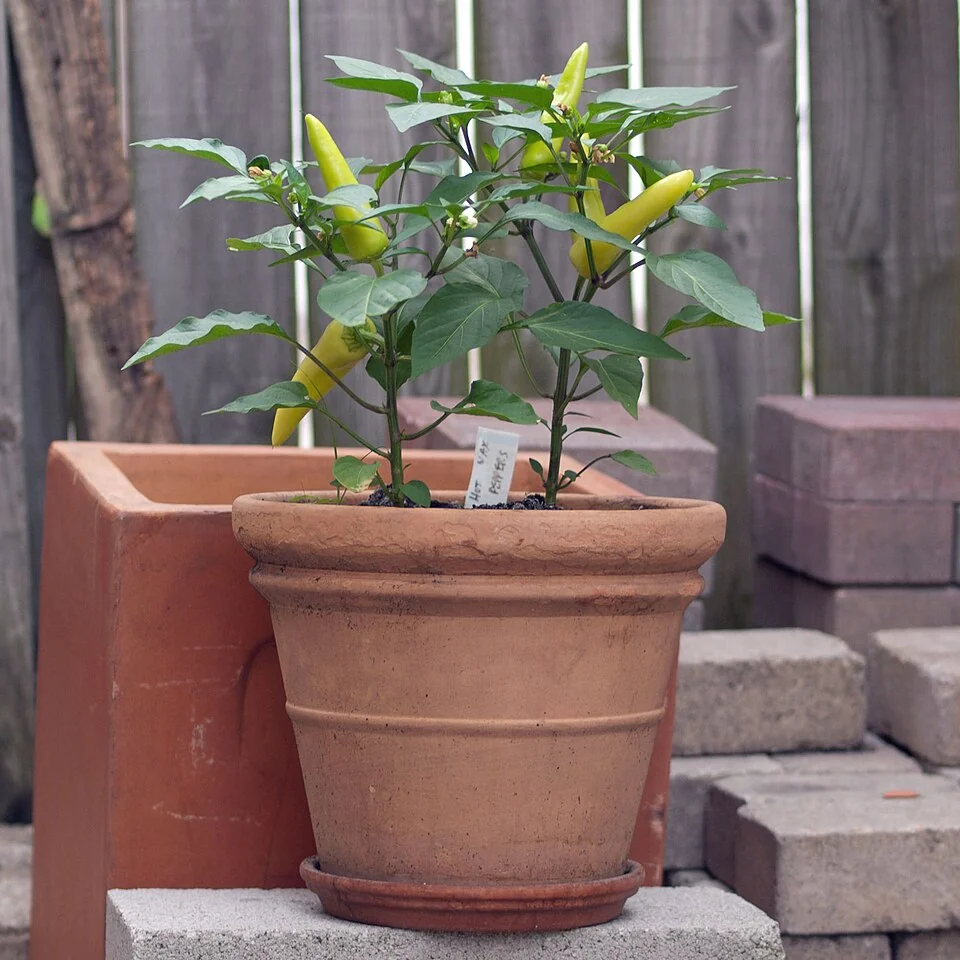
University of Minnesota Extension identifies peppers as warm-season plants and recommends transplanting after nights have warmed. Its guidance links consistent moisture to fruit quality and notes that extreme temperatures can interfere with growth and fruit set. Minnesota pepper guide
Select for the season you have
Choose a labeled cultivar and read its maturity description. If your warm season is short, compare that information with local extension recommendations rather than choosing solely by fruit size. Keep the tag after planting, including whether you selected a sweet or hot pepper.
Pick a container and location that suit the expected mature plant. Leave room to inspect flowers and fruit, and decide whether the plant will need support. A plant already carrying peppers at the store still needs a suitable place to continue growing.
Before moving it outside permanently, prepare it gradually for outdoor exposure. Check nighttime conditions as well as the pleasant afternoon temperature. The Minnesota source provides thresholds for its recommendations; its calendar is not a universal transplant schedule.
Learn the root zone's pattern
Check the media below the surface. If it needs water, water the root zone appropriately and manage the outflow. If it remains wet, investigate drainage before adding more. Note whether the plant is in a windy position, under an overhang, or close to a heat-reflecting surface.
Consistency means responding to the plant and media, not delivering the same small cup each day regardless of weather. Keep the watering point accessible as foliage expands. If the pot dries much faster than before, examine the changed conditions rather than assuming a fixed schedule remains adequate.
Avoid importing a row-crop fertilizer rate into a container. Establish what nutrients the mix already contains and follow an appropriate product label. Weak growth alone does not identify a nutrient deficiency.
Treat fruit stage as part of the plan
Read the cultivar description for mature size and harvest color. Some peppers are useful before their final ripe color, but that choice depends on the type and your purpose. Support the plant while clipping fruit stems where needed rather than pulling and risking a broken branch.
For hot peppers, use gloves and avoid touching eyes or sensitive skin during handling. Keep tools and harvested fruit clearly separated from other work if the heat level is uncertain.
If flowers drop or fruit develops patches, record the weather, moisture history, and affected parts before seeking identification. A pale patch is not a complete diagnosis. This guide offers a care sequence, not a fruit-set guarantee, universal feed ratio, or treatment for every pepper disorder; the primary source's dates and soil recommendations need adaptation for containers and local climate.