 Indiiramma Garden
Tell Sunscald from a Plant That Simply Needs More Water
Pale damaged patches after a move into stronger light should prompt a review of exposure as well as moisture. Giving more water is not a reliable response to every bleached leaf. Start with where the plant was, where it moved, and when the damage appeared.
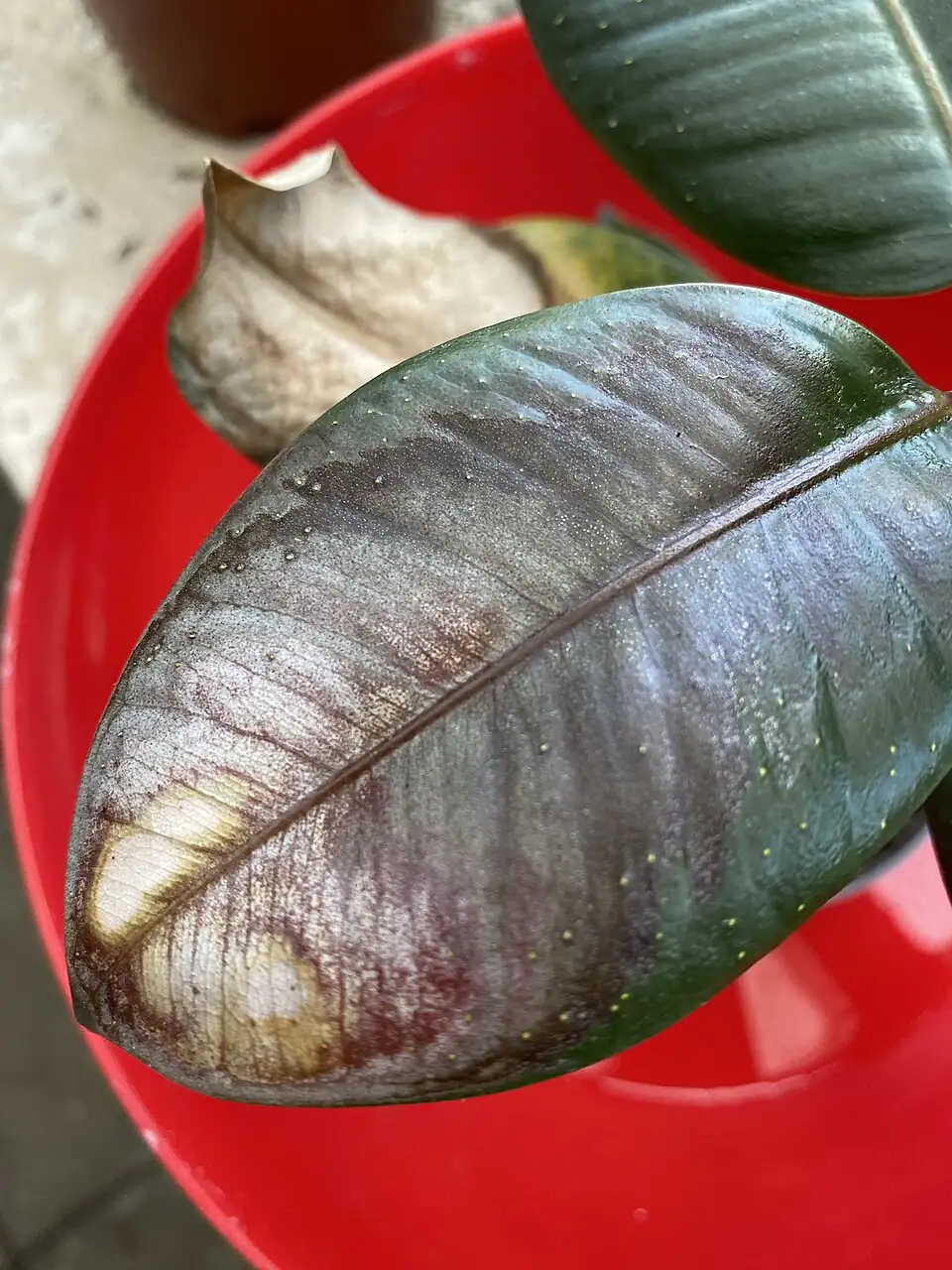
University of Maryland Extension describes excess-light injury as pale or bleached areas that may become brown and brittle. It also notes that plants adapted to indoor light can be damaged by a direct move outdoors. Maryland excess-light guide
Build a short exposure timeline
Record the move date and the previous position. Note whether a shaded nursery plant went straight onto an exposed patio, an indoor plant moved to direct outdoor sun, or a container stayed in place while nearby shade was removed.
Look at which leaves and surfaces are affected. Photograph the whole plant and close views before removing damage. Include the time of day and which side faced the strongest light. A pattern concentrated on exposed tissue is relevant evidence, but it does not prove sunscald on its own.
Check for other recent changes, including sprays, cold exposure, fertilizer spills, or physical injury. Leaf spots can arise from several causes. Do not use the word sunscald as a diagnosis merely because a patch is pale.
Check water without making it the only explanation
Inspect the root media below the surface and the drainage arrangement. If it is dry, address the actual watering need for that plant. If it is wet, do not keep adding water in an attempt to reverse the leaf markings.
Dry conditions can accompany excessive exposure, so these are not necessarily competing explanations. Manage the root zone and the light environment as separate observations. Avoid a dramatic sequence of soaking, feeding, and moving the pot repeatedly without a clear reason.
Make the next move gradual and plant-specific
Identify the plant's appropriate light range before deciding on its final position. A species adapted to shade does not become a full-sun plant simply through a longer acclimation period. For a plant suited to outdoor growing, choose a protected transition and increase exposure cautiously using guidance for that plant and local weather.
Inspect after changes rather than adopting one universal number of hours outdoors. Heat, wind, season, and the previous growing environment affect the transition. Keep watering access and the plant's root condition in view during the process.
Use dated photographs to distinguish old damage from new injury. Do not judge a correction solely by whether an already damaged patch changes color. If damage continues to spread, occurs on unexposed growth, or is accompanied by other symptoms, seek identification rather than assuming the first explanation was correct.
The Maryland source supports exposure-related injury and gradual adjustment. Its houseplant examples do not diagnose every outdoor crop lesion, and its directional window guidance assumes a northern-hemisphere setting. This article establishes no universal acclimation timetable, spray treatment, or promise that watering will repair injured tissue.