 Indiiramma Garden
Plan a Wind-Exposed Balcony Without Guessing
Wind creates two different planning problems: a plant can dry out or suffer damage, and garden objects can become unsafe. Horticultural advice can help with the first problem. It cannot establish the structural capacity of your balcony or certify that an attachment, screen, or container will remain secure in a storm.
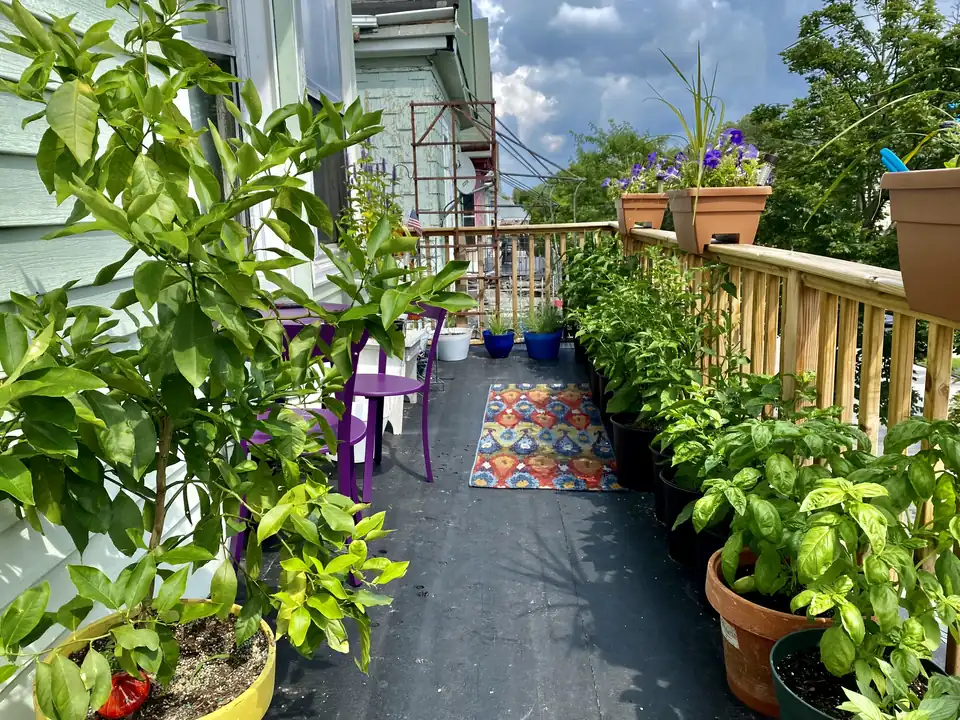
Establish the building limits first
Before adding a garden to an exposed balcony, check the property's rules and obtain appropriate advice about uncertain structural capacity or attachments. The Royal Horticultural Society directs readers to qualified structural advice when capacity is unclear. Its article is written in a UK context; local building and tenancy requirements must come from the relevant authority for your property.
Do not add weights, attach a screen to a railing, or suspend containers because a gardening article suggests that a heavier or more sheltered arrangement could help plants. Those choices can introduce loads and forces that this article does not assess.
Observe without inventing a wind rating
From a safe position, note which parts of the balcony are exposed and which are sheltered by the building. Record ordinary signs such as leaves being buffeted or the growing medium drying rapidly. You do not need to put a plant at the edge to test how much it can withstand.
An observation of a calm afternoon is not evidence of storm performance. Avoid assigning a safe wind speed to a container or support unless an appropriate specification and installation assessment actually establish it.
Keep the planting manageable
Plant height, leaf area, container shape, and the need for support all affect your choices. RHS guidance favors a low center of gravity, while NC State Extension discusses container weight and top-heavy growth. Neither point means that adding mass or buying a particular pot shape makes an arrangement safe.
Choose plants and containers you can inspect and care for without reaching over an edge. Plan the mature size, not just the small transplant. Where a plant needs a support, consider that support during the initial layout and check its suitability for the actual location.
Expect care to change with exposure
Wind can increase drying, so inspect the growing medium rather than relying on a fixed calendar. A sheltered corner may behave differently from an exposed one even when both receive similar sunlight. Keep watering access practical and watch the plant's response when conditions change.
If a forecast creates concern about falling objects or a setup you cannot safely manage, follow building-specific advice and make changes before conditions deteriorate. Do not try to rescue loose objects during dangerous weather. Choosing not to garden on a particular balcony may be the appropriate outcome.
Sources and scope
- Royal Horticultural Society, Greening balconies and roof gardens.
- NC State Extension, Plants Grown in Containers.
This is horticultural planning guidance, not a structural, installation, or storm-safety assessment. No balcony or proposed attachment was inspected.