 Indiiramma Garden
Hand-Pollinate Container Squash When Needed
Hand pollination can help when a squash has receptive flowers but inadequate pollen transfer. First distinguish male and female flowers; an immature fruit beneath a blossom does not prove successful pollination.
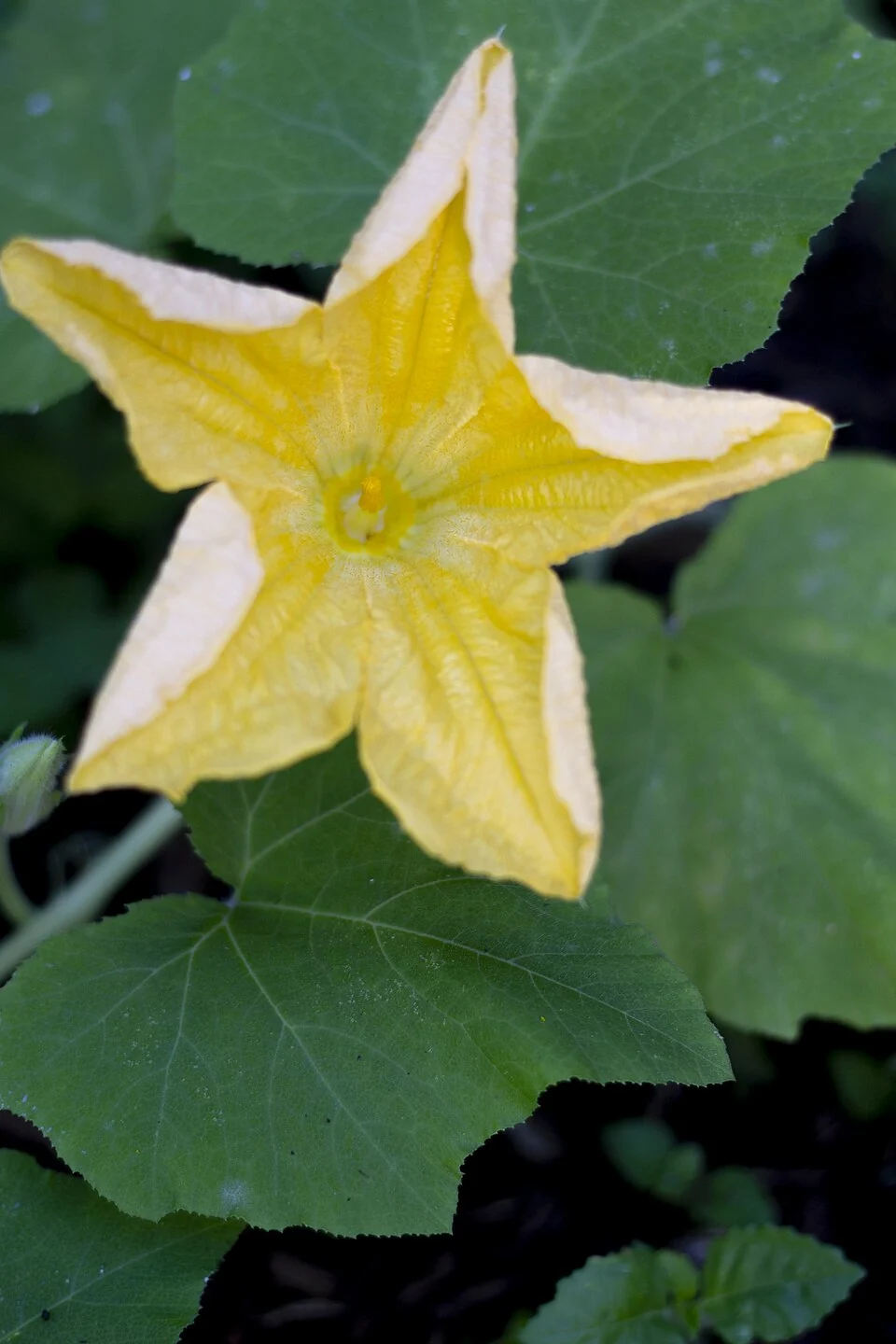
Check that there is a female flower
A male squash flower usually sits on a relatively slender stalk. A female flower has a swollen ovary below the petals, shaped like a small version of the developing squash. The University of California extension handout uses this difference to help gardeners identify the two.
Early flowers may be male, so do not treat a plant with only male blossoms as a failed crop. You need an open female blossom and usable pollen at the same time. This guide concerns squash, not a method to apply indiscriminately to every vegetable flower.
Work while the flower is open
Inspect flowers in the morning, when squash blossoms are commonly open. Use a small soft clean brush to collect visible pollen from the male flower's anther, then gently touch it to the female flower's stigma. Handle the flowers lightly rather than poking into the ovary or tearing the female blossom.
Another method is to remove a male flower, carefully fold or remove its petals, and use the pollen-bearing structure to touch the female stigma. The important transfer is pollen onto the receptive part of the female flower. Brushing the petals without reaching the stigma does not achieve that purpose.
Watch the result without promising a harvest
Mark the flower in a way that does not constrict its stalk and record the date. Watch whether the young fruit continues developing over subsequent days. A swollen ovary was present before your intervention, so its immediate appearance cannot demonstrate success.
Pollination is only one influence on fruit development. University of Minnesota Extension notes that water stress and high temperatures can cause flowers or young fruit to abort. If the plant repeatedly loses fruit, review its growing conditions rather than repeating hand pollination as the sole response.
Keep seed saving separate
A garden fruit-set intervention is not controlled breeding. Saving seed true to a variety involves additional compatibility and isolation questions, including possible pollen from other plants. This short method does not establish seed purity, certify a cultivar, or guarantee fruit set. Leave those claims out of the plant log even if a hand-pollinated squash grows well.
Sources and scope
- University of California Cooperative Extension Master Gardeners of Tuolumne and Calaveras Counties, Hand Pollinating Squash Plants.
- University of Minnesota Extension, Flower and fruit set in cucurbits.