 Indiiramma Garden
Thin Seedlings Before Crowding Becomes a Problem
Use the crop's final spacing to decide which seedlings can stay. Removing a few early is usually less disruptive than waiting for crowded roots and stems to become inseparable.
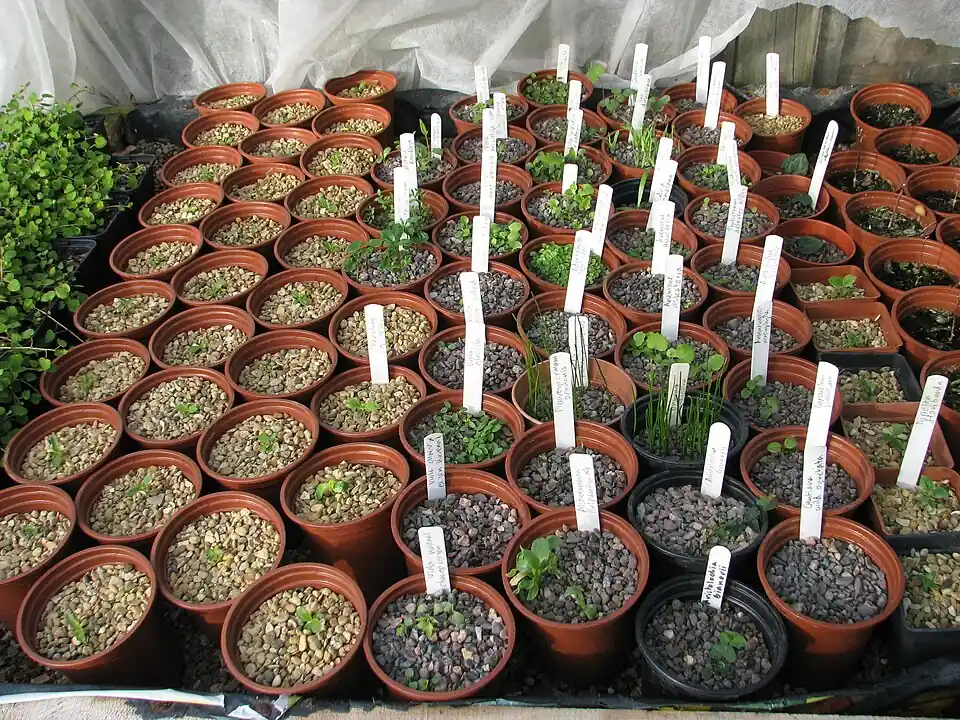
Find the spacing target
Read the seed packet or crop-specific guidance and distinguish sowing spacing from the space a plant needs as it grows. A tray of temporary transplants has a different purpose from a container intended to hold a crop until harvest. Decide which one you are managing.
Look for seedlings with developing true leaves, not only the first seed leaves. Check their condition and position as well as their size. The largest seedling is not automatically the best keeper if it is damaged, badly placed, or belongs to an uncertain mixed sowing.
Remove extras with the keeper in mind
For indoor cell-grown seedlings, University of Minnesota Extension recommends cutting unwanted seedlings at the medium surface after true leaves develop rather than pulling through the keeper's roots. Use small clean scissors and keep the cut clear of the stem you intend to retain. Remove the severed top from the container.
For directly sown crops, use their recommended final spacing. Do not retain a tight ring of extras merely because they all germinated successfully. If the crop is not suited to transplanting, attempting to save every spare seedling can create more root disturbance than simply thinning.
Pot on only suitable transplants
Some seedlings can be moved to their own containers, but that is a separate operation from snipping extras. Prepare a suitable destination first. Support the root ball while lifting; do not squeeze the soft stem or pull a plant out by its top. Follow crop-specific depth and handling advice rather than burying every species more deeply.
After thinning or potting on, water appropriately and watch the remaining plants. More space does not remove the need for sufficient light, and stretched growth will not be corrected by fertilizer alone. Record the thinning date and the intended final plant count. That gives you a simple check on whether the container is being managed for mature plants rather than for the maximum number of sprouts.
Sources and scope
- University of Minnesota Extension, Starting seeds indoors.
- University of Maryland Extension, Planting Vegetables in Containers.